
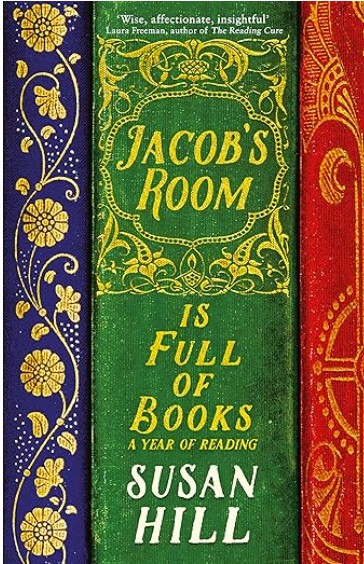
Perhaps I should have waited a little while and not read books from authors about their reading consecutively because invariably you compare and one comes off worse than the other. Unfortunately, that is this book although there are many elements to it that I did enjoy.
Set across the course of a year, the writing is anchored by a love of Norfolk, its birds and the landscape, where Hill lives. There are frequent snippets about the herons, about the mist over the river and then when in France the sapping, humid heat making reading almost impossible. Hill is definitely a reader who needs to be in the mood to read a particular book.
There were many books that I have read mentioned and that is always a joy and also many that I haven’t. Of those that I have I enjoyed the peep into Hairy Maclairy from Donaldson’s Dairy by Lynley Dodd and Hill’s take on the villains in James Bond novels amongst other things were comforting but I also found many snippets and stories I didn’t like.
Chief of these was the defense of the Man Booker Prize, as it was then, in 2011 when mistakes were made. Apparently, the judges became known as the ‘zip along’ judges for a comment made by one of them in a press conference. It is what we might say about a book when talking together but it isn’t sufficient as a criteria for a prestigious book award. Hill blames everyone from the authors/publishers because the selection of books entered that year was not strong, to naming the judge who made the zipping comment. It is exactly this that gets Book Awards a bad name. I have often looked at the criteria for a prize and wondered how you judge a book using them. If a judge can’t articulate the criteria we are doomed!
In contrast to Rentzenbrink’s book which is warm, inclusive and very enthusiastic, this book can be a little bit mean in places, a little bit snobby about books – beach reads in particular – but comes from the heart of woman who reads seriously. The commonality was that both authors seriously reread and I wonder if it is this that ‘makes’ an author as opposed to a reader. (Now I’ll come across plenty of authors who don’t reread!)
There are many things that Hill can’t be bothered to do anymore.
I am not keen on folk tales either. Or folk songs. Cecil Sharp must have been a bore.
p22
one of which is explain where her ideas come from. I think that is the most interesting part of writers, how they put seemingly random ideas and thoughts together and come up with a book. I can remember being at a conference where Pie Corbett, an author for children and, at one point, very important in how writing was taught to children, spent a whole day explaining where imagination comes from: the experiences children have, games they play, books they read and the talk with others, when a delegate raised her hand at the end and asked ‘So where does imagination come from?’ If we don’t let young people in on this, we may lose some writers. Interestingly, Hill does then go on to start to explore where her writing comes from. Perhaps she is a bit tired of answering the same questions over and over again.
I’ll have a break from books about books and read something totally different.
 Trying to read all the good books
I’d love to hear what you think