
There are many ways organise planting in the garden. By geographical location often dependent on the soil, e.g. a mediterranean bed or by plant shape, e.g. spiky next to rounded but this book creates plant combinations based on colour. This could be harmonious colours, monchromatic such as the white garden at Sissinghurst, colour accent schemes or clashing schemes which are my favourite.
The book is divided into chapters by colour and then there are several pages ranging from perennials to shrubs to climbers and plants with colours that would work well with them based on all the other colours. At the end of the chapter is an overview of red with examples of all the other colours. These pages can refer you to the chapter you have just read or onwards to other chapters.
For example take the main plant Crocosmia ‘Lucifer’ of which I have plenty in my garden. Combinations suggested are Amaranthus caudatus with its dangling bluey-red tassels in an alternative form to the spikey crocosmia, Crocoasmia ‘Emily McKenzie’ with its orange flowers, a bit too samey for me, and Ricinus communis ‘Carmencita’ for its large, jungly looking leaves.
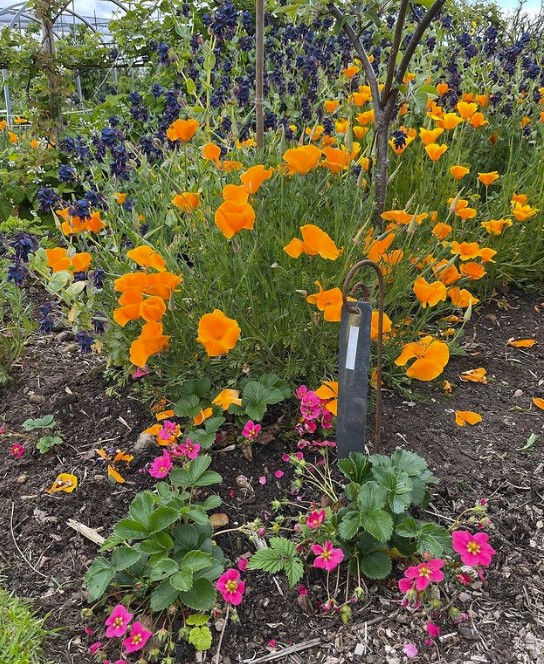
I am a real fan of orange and pink – contrasting colours – and the book suggests Cosmos bipinnatus with Dahlia ‘David Howard’ whis is a fairly tame combination. I will have to try it. I have pink flowering strawberries and californian poppy in this combination and they really zing against each other. Perhaps the orange is emphasised with the contrasting Cerinthe purpurescens behind.
That said, this book has a lot to offer in terms of combinations and its use of shrubs and climbers as well as perennials. It is definitely aimed at those in a temperate climate.
What the book did make me do was think about the planting I had in my garden and whether it was working and if not, were there other choices I could make. Although I borrowed this book from the library, I will probably end up buying my own version so that I can refer to it when I need to.
 Trying to read all the good books
I’d love to hear what you think