
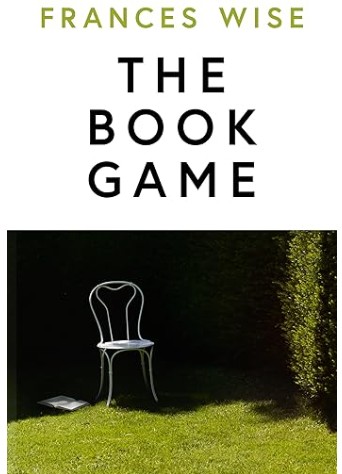
This was a book chosen for our book group and sparked wide-ranging discussions from AI to the number of ‘Lawrences’ that we know and so was an excellent choice.
The premise of the book
Set in a wonderful manor house with beatifully furnished and lived in rooms and a swimming pool, Lawrence, a Professor, invites a group of people he knows for a writing retreat. The blurb at the beginning says they are ‘old friends’ but they aren’t. Each one comes with an agenda or a need and over the course of the week, these are revealed. Lawrence is living in his wife’s house where she provides the luxury and status domestically, but he is the academic whose time and ideas are unfortunately running out. He is having an affair, not the first, and he is struggling to maintain his air of superiority along with which goes the micro-managing of the retreat and what his guests must do.
It is a hot summer, the food is good (if we’d read this book in the heat of this summer, I might have been tempted to cook the food in it for the book club) with an atmosphere of Tuscany. But this is no holiday and after the nights of drinking, the friends must turn to their work. Each character is well-drawn, and as the academics in our book club said, very like real life. Academia is a competitive world and this does not bring out the best in people.
What I was expecting
I read a lot of detective/crime novels and so I have to admit to expecting a closed-circle murder story. Everyone gathered in one place for a set amount of time, friends with grudges, jealousies and rivalries, hot weather and lies and deceptions. In fact, the prologue sets us up to think something is going to happen as Lawrence watches from the house his wife and best friend looking like they are more than just friends. It sets the tone and you know from the start that this is not going to be an idyllic summer retreat. Perhaps that is part of The Book Game.
Half-way through I began to wonder when the murder would happen and three quarters of the way through I realised that it wouldn’t. This is a novel about academia and writing and success with the most successful character financially, Miles, being the least present and the one that feels the most ignored. Perhaps academia turns its nose up at financial success, although now researchers are often encouraged to create start-ups with their work and turn these into businesses.
If there is no murder, how does the book end?
At its simplest with everyone returning home but there is an epilogue set in the future which some reviewers have found a little odd. Lawrence and Claudia’s son returns to the manor house with his daughter, Eve, and peers through the gate at a dilapidated house. They enter and find the swimming pool full of water that stinks and possibly a plaque naming Lawrence and his work on the side of the folly. Eve tries to imagine her Grandmother and the parties that took place at the house but can’t and takes a photo of it. We then trace this photo through its many lives and the manor house until it is knocked down and a laboratory for a university built on the site. Eventually, the photo is cut up for collaging and the remains burned in the fire place.
This is where the benefits of book club are so good at deepening understanding. As a teacher, we often used to say about reading and that we dislike what we don’t understand and that is true for me too. I found the epilogue odd and couldn’t square the circle I knew it was closing but our discussions centred around academic arguments, rivalries and jealousies being transitory or unimportant in the long-term. They feel it if you are involved at that moment but in the future no one will remember them because in the grand scheme of life they are so inconsequential.
So, why is it called The Book Game?
This question also had me stumped. There is a book game in the novel that the retreat guests play one evening and we have adopted it to be our Christmas party game this year. Each person takes it in turn to read out a first sentence of a book and then everyone writes down what they think the second sentence might be. These are then read out along with the real second sentence and you can vote on which one you think best. We will love this, especially me who never takes these things seriously and will write the most ridiculous sentence I can think of. There is, therefore, a real book game. However, I think there are more.
- Part of the book game is that this is written by two academics. You can’t tell that it isn’t one person and so I think this is part of a ‘game’ of playing with writing. The name of the author Frances Wise is gender neutral, the two authors are male and female, and does have some meaning linked to being a free person often connected to the idea of sincerity. I think there may a little game going on here, particularly with the surname Wise.
- The idea of a closed-circle novel which many academia novels are, but so too are crime novels. The tone from the prologue directs us to thinking that a cataclysmic event will occur that will affect everyone. There are events that affect each character but not in the style of a murder. It’s part of the game of a novel – making your reader work against their expectations of books.
- Part of the game of a novel is when to reveal the true meaning of a book, and here we wait until the epilogue. It’s a long time to keep your reader hanging on, but it worked.
- Even the peacocks or their descendents, I haven’t mentioned them but they are present in the book as a device, last longer than the academics and their arguments, but are the children probably of those who were present during the retreat as was Eve. So we have some playing with strands of longevity and symbolism. Peacocks strut and are noisy, as are some academics, but every now and then they show us their wonderful tail feathers and we love to see that and pick up a feather (very 1970s house decoration).
- It’s a difficult game to write about an institution you are employed by, and not show it off at its best. The fact that the authors come from different universities probably made it harder for colleagues to ask if one of the characters was based on them, but I wonder if the whole of academia and getting published is a ‘game’ that has to be played.
It is an excellent book club choice.
 Trying to read all the good books
I’d love to hear what you think