
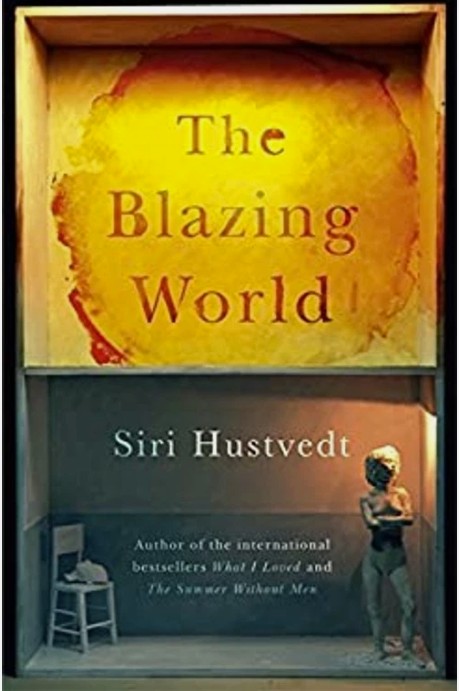
I have been thinking for a while that I should try a book by the author Hustvedt and found one in my local library. It has everything I like about books: a focus on art and the art world and is fragmentary in that the narrative is created out of articles, letters and notebooks from a variety of points of view.
The first surprise came when the Editor’s Introduction set out the whole narrative. Framing the book, it explains that Harriet Burden, a long-time artist, had never really made it in the art world and this she put down to the fact that she is female. After her husband, a well-known art dealer, had died she showed her work through three different males, each one receiving acclaim. The introduction then goes on to explain the notebooks by Burden, the seemingly disorganised mess they were in and how they went about creating the book.
At the time, I felt that it was quite a long book considering the outline had been given to us in the introduction and so the arc had been explained and in fact this is a book of seemingly endless explanation of the world of art and men and the toll it took to show your work through other people, not totally on Burden but also those who agreed to be play the part.
This is a book of intense navel-gazing, so much so that it defeated me. I found I didn’t care about the characters and the toll that was being wreaked on them and I didn’t much care for the artist Harriet Burden. It’s a character driven novel so there wasn’t a plot to hang on to when times became a little slow.
It is a story of unmasking and so the three male artists chosen to show her work as their own were carefully chosen to represent the world of Art with a capital A. Anton Tish was a brash young artist who believed wholly in himself and his genius. Phineas Eldrige gave us the queer artist who never fully revealed himself and Rune who is the macho artist, conquering all. I suspect that the power of this artist goes on to trick or overpower Burden and in so doing uses her.
Unfortunately, this is a DNF but I would be interested in reading some of Hustvedt’s non-fiction writing about art.
 Trying to read all the good books
I’d love to hear what you think