
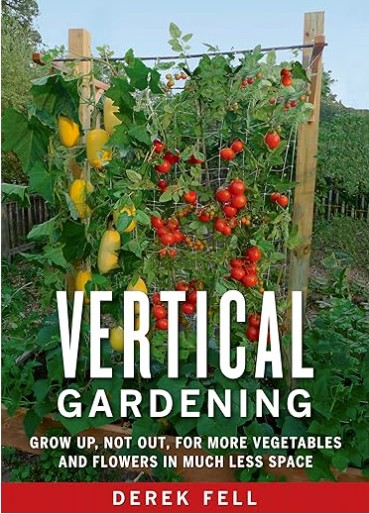
It is a permaculture understanding that growing upwards is a way of making the most of all available space, whether you have a lot or a little. And so, I decided to read about vertical gardening in order to see what I could do in 2026 to start to prepare for the day when I need to reduce the amount of land I grow on. That isn’t yet but there is nothing wrong with preparing.
The book is full of information about composting, choosing a site, preparing the soil, sowing seeds, pests etc with only a small proportion about actually growing upwards. I was, however, interested in the different types of trellising that you can make out of bamboo canes, poles and netting. I am not a fan of netting because it is is almost impossible to remove the plants from it at the end of the season but I could use netting made of hemp that would rot down in the compost bin.
It was also good to be reminded about trailing or cascade planters like those you see for strawberries and you can build these out of plant pots of decreasing size. I also liked the inclusion of the tiered plant stands that would look good on our patio and so I will get one or two of these. Charles Dowding has dabbled with vertical growing in wooden barrels but I wasn’t that impressed with the harvest for the volume of material needed in the barrels.
According to the author, one of the advantages of vertical growing is the narrower beds needed. The roots will need the same amount of space but this could be underneath paths as long as the bed is wide enough for the structure to grow up and the plants.
The audience for this book is beginner growers who need some information on pests, making compost, soil type etc but there is little new in it for more experienced growers.
 Trying to read all the good books
I’d love to hear what you think