
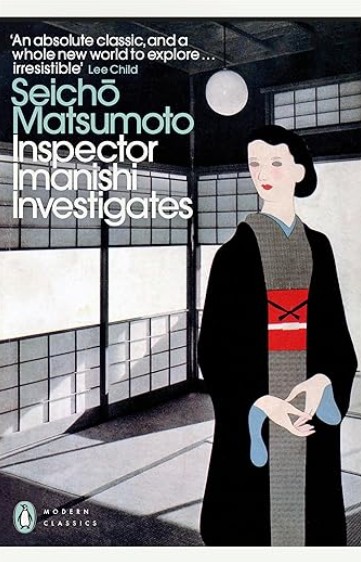
Published and set in the 1960s, this procedural detective novel has a convoluted plot that is only fully revealed at the end and provides an insight into Japanese life at that time.
A body turns up on a railway line, badly beaten with the police unable to identify who it is. Inspector Imanishi and a team search up and down the line in Tokyo based on snippets of conversation overheard between the man found dead and someone else. Not a lot to go on, with this being one of the features of the plot: an accent and a place. Nothing is found and so the detectives move on to other work but Imanishi and a younger colleague, Yoshimura, continue to work on the case inbetween other work and in their own time. This relationship illustrates the hard working detective and an eager, younger colleague willing to learn from one considered to be very good.
The case takes Ishimanshi to many places where we are also introduced to their specialities, a beautifully made abacus from Unshu or a lacquer hair clip for his wife from Shimane but sometimes these are all he brings back. The book is very good at showing us the slow, painstaking process of finding out information – letter writing to other prefectures, overnight trains and a very understanding wife.
The relationship between Imanishi and his wife is one that sits a little uncomfortably today as she waits at home to take off his coat and provide something to eat at all times of the day and night whilst he is a little surly. He even uses her savings to travel to Shimane all the while keeping Yoshimura up to date with his findings.
Introduced at an early stage is the Nouveau Group, architects, composers, poets and critics who are avant garde and the ‘in people’ photographed and included in magazines and newspapers. They are woven into the plot and show us some of the hypocrisy of the times – being famous and not wanting people to know where you have come from, being avant garde but marrying into money, having a hostess as a secret girlfriend. All speak of a rigid society where class is important as is ancestry.
Slowly, slowly, Imanishi makes connections between seemingly unconnected events and actions and the murderer is finally revealed although I would defy any reader to work out who it was with the clues we are provided. The novel shows us Japanese society after the war when there is great change afoot along with a detective who is a hardworking and loyal. This is not typically how detectives today are portrayed and so it is refreshing to read about one who is. It is also a reflection on the traditional Japanese view of how success is achieved.
Whilst I found the style of writing a little formal or stilted, the book was an engaging read.
 Trying to read all the good books
I’d love to hear what you think