
There have always been books that focus attention on one thing, narrowing it down, until you realise that this focus becomes a window onto a much wider world. Helen MacDonald did it with H is for Hawk, using the training of the hawk to understand further her grief.
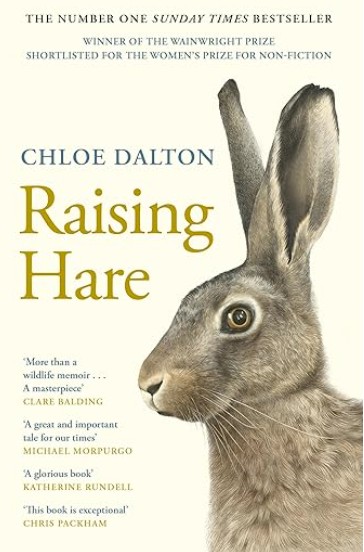
In Raising Hare, Dalton has taken the other road, not taming but keeping a hare wild whilst raising it and in doing so, anchoring herself to the land and what is important in her life.
During Covid lockdown, Dalton installed herself in her house in the countryside and whilst out walking came across a baby hare in the middle of the path. She was unsure about what to do and knew little about hares, which of us does, and so scooped it up with grass so that if its mother found it, she would not reject it because of the smell of humans.
This was a decision that was to change her life, not just because she wrote a book about it, but because caring for a wild animal and allowing it to stay wild means we must observe and intervene as little as possible.
The hare lives and takes up residence partly in the house and outside in the garden. She observes the seasonal and maturation changes in its fur, its quick weight gain, its leaping and spinning, its grooming and behaviour challenges. It is said in books that hares are ‘absent parents’, feeding their young once in 24 hours. Dalton’s experience is that the mother stays near the leverets, feeds them three times a day and encourages them to stay still, camauflaged until dusk which is when hares come out.
Whilst out looking for the hare and her leverets on evening, Dalton realises that her focus on the hare has tied her to the land, providing an opinion about how the land around her is farmed, encouraged her to plant hedges of native trees and shrubs, and to start identifying the birds around her.
As Dalton says:
I have not tamed the hare, but in many ways, the hare has stilled me.
p278


I’d love to hear what you think